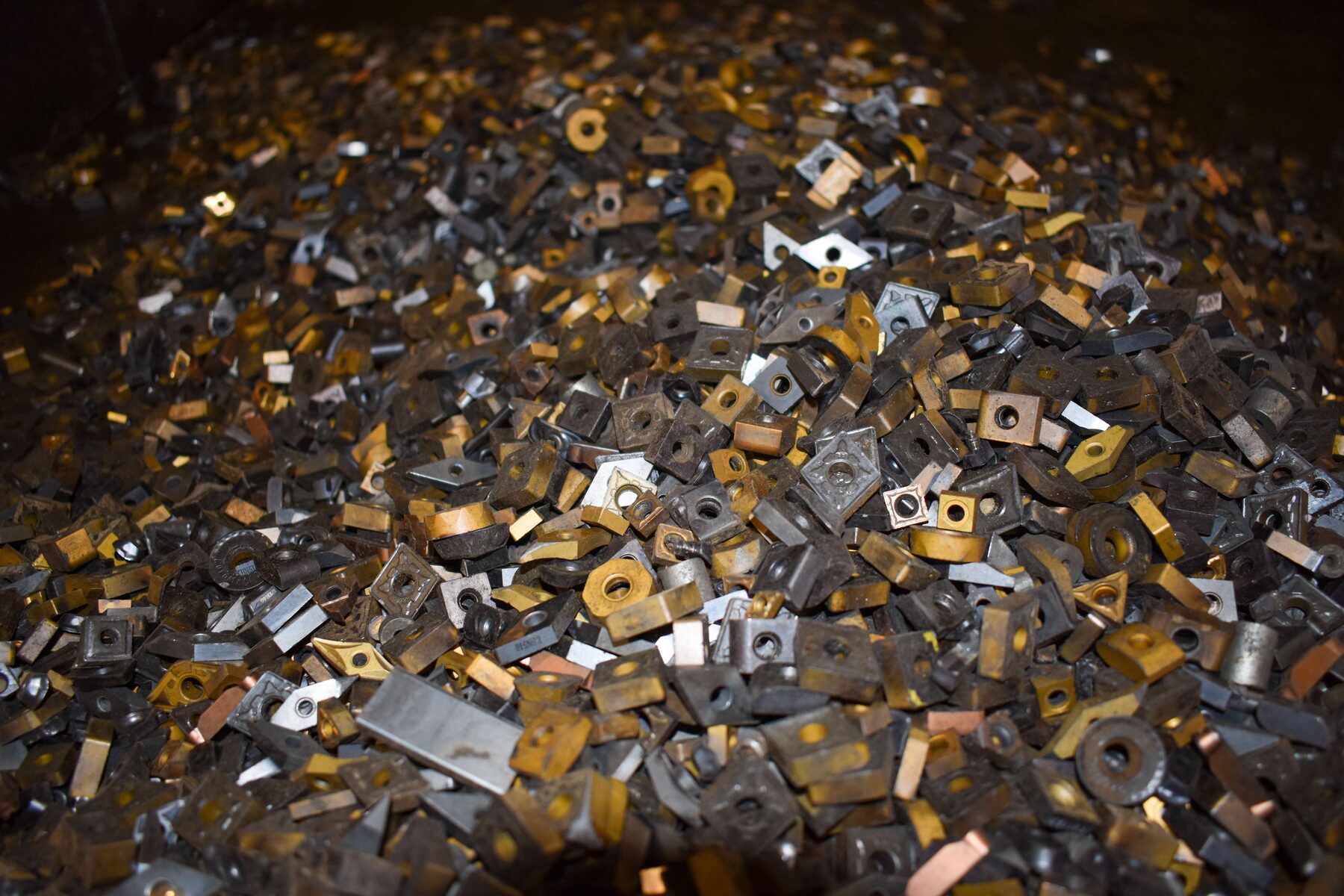
What tungsten carbide is, and why it is worth recycling
Tungsten carbide is a cemented composite of tungsten carbide grains in a cobalt binder. Its hardness, density and wear resistance make it the standard material for cutting inserts, drills, mining compacts, dies and wear parts across aerospace, automotive, oil and gas, and mining.
Tungsten carbide scrap is the worn-out or surplus tooling that results: dull inserts, broken drills, used compacts. Because the United States has not mined tungsten commercially since 2015 and global supply is concentrated, recovered carbide is one of the most valuable scrap streams a machine shop produces. Clean, sorted carbide is reclaimed directly; mixed and brazed material goes through chemical processing back to tungsten powder.
How we grade it
Each lot is weighed, sorted by type and checked with a handheld XRF analyzer. Brazed shanks, steel inserts and tungsten heavy alloys are separated from clean cemented carbide and paid at their own grade. You receive the breakdown in a settlement report before payment. Minimum order weight affects price: lots over 100 lb, 500 lb and 1,000 lb each move up a tier, and loads over 2,000 lb are quoted individually.
Grades we buy
| Grade / type | Forms accepted |
|---|---|
| Inserts | Clean, used indexable inserts, coated or uncoated |
| Drills and rounds | Solid carbide drills, end mills, reamers, rod ends |
| Mining compacts | Buttons and compacts from drill bits |
| Dies | Carbide dies, nibs and wear parts |
| Flats and C-grade | Flats, strips, brazed-tip material, miscellaneous carbide |
| Tungsten alloys | Heavy alloys: Hevimet, Densalloy, Mallory and similar |
Sorted material earns the higher grade. Mixed loads are sorted here and settled by what they contain.
Ready to sell?
Sales desk: sales@bsa-usa.com
or call (734) 272-4540. We quote by grade and weight; photos of the material speed up the quote.